Mastering Sublimation with the 3D Wonderland Cracked Hole Tumbler 11 Design
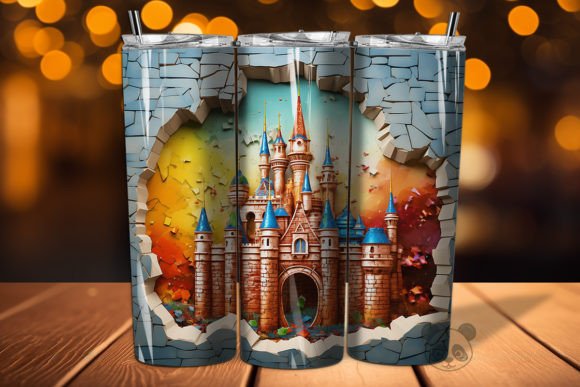
The landscape of custom drinkware creation has evolved significantly, moving beyond simple logos and text to immersive, full-wrap visual experiences. At the forefront of this evolution is the integration of high-resolution digital assets designed specifically for curved surfaces. A prime example of this technological and artistic convergence is the 3D Wonderland Cracked Hole Tumbler 11 design. This specific asset represents more than just a pretty picture; it is a technical solution for creators looking to produce professional-grade skinny tumblers that stand out in a saturated market. By leveraging a 20 oz Skinny Tumbler Sublimation Design, artisans can transform blank stainless steel into narrative-driven pieces of art that capture the imagination.
Understanding the utility of such a design requires a deep dive into both the aesthetic principles of the "Wonderland" theme and the technical requirements of sublimation printing. The term "Wonderland" evokes a sense of whimsy, depth, and surrealism, often characterized by watercolor textures and dreamlike sequences. When combined with a "Cracked Hole" motif, the design introduces an element of dimensional intrigue, suggesting a portal or a break in reality. For the sublimation printer, this translates to a complex interplay of colors and shadows that must be rendered perfectly to achieve the desired 3D effect on a physical object.
The Technical Architecture of High-Resolution Sublimation Files
Success in sublimation printing begins long before the heat press is closed; it starts with the quality of the digital file. The 3D Wonderland Cracked Hole Tumbler 11 Background is engineered to meet rigorous industry standards, typically provided as a PNG file with a resolution of 300 DPI (dots per inch). This resolution is non-negotiable for professional results. Lower resolution images may appear acceptable on a computer screen but will reveal pixelation and jagged edges once transferred onto the tumbler, especially given the large surface area of a 20 oz skinny tumbler.
The dimensions of the file are equally critical. A standard wrap for this type of tumbler usually measures approximately 9.3 inches by 8.2 inches. These measurements are calculated to account for the circumference of a standard 20 oz skinny tumbler while leaving a small margin for error during the wrapping process. The "Straight Tumbler Wrap PNG" format ensures that the design aligns correctly without distortion. When a creator downloads an instant digital file, they are acquiring a blueprint that has been pre-calibrated for these specific physical constraints. This eliminates the need for manual resizing, which can often degrade image quality if not handled with professional graphic design software.
Furthermore, the file format itself—PNG—is chosen for its ability to handle transparency and lossless compression. While the background of the Wonderland design is likely fully opaque to cover the white substrate of the tumbler, the PNG format ensures that color fidelity is maintained throughout the editing and printing process. Unlike JPEGs, which introduce compression artifacts that can muddy the delicate gradients of a watercolor style, a 300 DPI PNG preserves the crispness of the "cracked hole" details and the subtle shifts in the seamless pattern.
Aesthetic Dynamics: The 3D Wonderland Theme
The visual appeal of the Wonderland 3D seamless pattern lies in its ability to create depth on a two-dimensional surface. Sublimation is unique because the dye becomes part of the polymer coating of the tumbler, allowing for photorealistic reproduction. The "Wonderland" concept often utilizes watercolor techniques, which are renowned for their fluidity and organic blending. However, translating watercolor to a 3D effect requires careful manipulation of light and shadow within the digital design.
The "Cracked Hole" element serves as a focal point, drawing the viewer's eye into the center of the design. In a physical context, this creates an optical illusion where the tumbler appears to have depth, as if one is looking through a fracture into another dimension. This is achieved through the strategic use of darker tones around the edges of the crack and lighter, ethereal tones within the "Wonderland" background. The seamless nature of the pattern ensures that when the wrap is applied to the cylindrical shape of the tumbler, there are no visible seams or breaks in the imagery, maintaining the immersion of the scene.
For creators, understanding the color profile of the design is essential. Watercolor styles often rely on pastel palettes, vibrant splashes, and soft gradients. When sublimating, colors can shift slightly due to the heat transfer process. A high-quality Wonderland background file is often pre-adjusted to compensate for these shifts, ensuring that the final product matches the digital preview. The interplay between the "3D design" elements and the flat watercolor textures creates a sophisticated look that appeals to consumers seeking unique, artisanal products rather than mass-produced goods.
Workflow Integration for Professionals and Hobbyists
Implementing the 3D Wonderland Cracked Hole Tumbler 11 into a production workflow requires a clear understanding of the sublimation process. Whether the user is a business owner scaling production or a hobbyist creating gifts, the steps remain consistent, though the volume may differ. The process begins with the instant digital download. Upon purchasing, the user receives a ZIP file containing the high-resolution PNG. It is imperative to note that this is a digital-only transaction; no physical tumblers or printing materials are included.
Once the file is extracted, the next step is preparation. Users must have access to sublimation software capable of handling large format prints, such as Adobe Photoshop, Illustrator, or specialized sublimation programs like AcroRIP. The file, sized at 9.3 x 8.2 inches, should be placed into the workspace without resizing to maintain the 300 DPI integrity. Mirroring the image is a crucial step often overlooked by beginners; since sublimation transfers the image in reverse, failing to mirror the Wonderland tumbler wrap will result in a backward design on the final product.
Printing requires a sublimation printer equipped with sublimation ink and sublimation paper. Standard inkjet printers cannot be used for this application. The print quality settings should be set to "High" or "Best" to ensure the intricate details of the cracked hole and the watercolor textures are captured accurately. After printing, the image is trimmed to fit the tumbler, leaving a small overlap if necessary, though the precise sizing of the digital file often minimizes the need for excessive trimming.
The pressing phase is where the magic happens. The printed design is wrapped tightly around the 20 oz skinny tumbler and secured with heat-resistant tape. A shrink wrap or silicone sleeve is often used to apply even pressure across the entire surface, which is vital for preventing ghosting or blurring. The tumbler is then placed in a convection oven or a dedicated tumbler press. Typical settings involve temperatures around 380°F to 400°F for several minutes, depending on the specific equipment and tumbler brand. The heat causes the sublimation ink to turn into a gas, penetrating the polymer coating of the tumbler and permanently bonding with it.
Market Applications and Consumer Appeal
The versatility of the Wonderland skinny tumbler design opens up a wide array of market applications. For small business owners, this design fits perfectly into niches such as fantasy literature fans, gamers, and lovers of surreal art. The "Wonderland" theme resonates with audiences who appreciate escapism and creativity. By offering a product that features a 3D tumbler wrap, sellers can differentiate themselves from competitors who offer flat, generic designs.
Educators and researchers in the field of digital manufacturing can also find value in studying such designs. They serve as excellent case studies for how digital assets are optimized for physical production. The transition from a seamless pattern on a screen to a cohesive image on a cylinder demonstrates the practical application of geometry and color theory in modern crafting. Furthermore, the popularity of these items highlights consumer trends towards personalized, high-aesthetic daily use items.
Consumers are increasingly drawn to products that tell a story. A tumbler featuring a Wonderland png with a cracked hole motif suggests a narrative of discovery and mystery. This emotional connection drives purchasing decisions. Additionally, the durability of sublimated designs means that the artwork will not peel, crack, or fade, making it a practical choice for daily use. The combination of artistic depth and functional longevity makes the 3D Wonderland Cracked Hole Tumbler 11 a compelling product in the custom drinkware sector.
Considerations for Quality and Consistency
While the digital file provides the foundation, the final output depends heavily on the execution. One of the primary considerations for users is the quality of the blank tumbler. Not all stainless steel tumblers are coated for sublimation. Using a non-sublimation blank will result in the ink wiping off immediately after pressing. Therefore, ensuring the compatibility of the physical substrate with the Instant Digital Download PNG is paramount.
Color management is another critical factor. Monitors display colors in RGB (Red, Green, Blue), while printers operate in CMYK (Cyan, Magenta, Yellow, Key/Black) or specific sublimation color profiles. Discrepancies between what is seen on the screen and what is printed can occur. Professionals often use color calibration tools and ICC profiles specific to their printer and ink combination to minimize these variances. The rich blues and purples often found in a Wonderland watercolor design can be particularly challenging to reproduce accurately if the printer is not properly calibrated.
Moreover, the "Cracked Hole" detail requires precise alignment. If the wrap is not centered correctly on the tumbler before pressing, the focal point of the design may end up skewed or partially hidden by the seam. This emphasizes the importance of the precise 9.3 x 8.2 inch dimensions provided in the file. Deviating from these measurements can disrupt the balance of the 3D seamless pattern, diminishing the overall visual impact.
Expanding Creative Horizons with Digital Assets
The availability of high-quality digital assets like the 3D Wonderland Cracked Hole Tumbler 11 democratizes the creation of professional-grade merchandise. It allows individuals without advanced graphic design skills to produce stunning products by leveraging the work of skilled digital artists. This symbiosis between digital designers and physical creators fuels the economy of handmade and custom goods.
Creators can further customize these base designs by adding text, names, or additional graphical elements using their preferred software. The transparent capabilities of the PNG format allow for layering, enabling a high degree of personalization. For instance, a business owner could add a logo to the bottom of the Wonderland wrap or insert a customer's name near the rim, transforming a stock design into a bespoke commission.
In the broader context of digital commerce, the model of selling instant download files supports a sustainable and scalable business approach. There is no inventory overhead for the designer, and the customer receives their product immediately. This efficiency benefits all parties involved, from the artist generating the Wonderland 3D seamless pattern to the end-user enjoying a unique, beautifully crafted tumbler. As technology advances and sublimation printers become more accessible, the demand for such specialized, high-fidelity designs is poised to grow, continuing to bridge the gap between digital imagination and tangible reality.
Ultimately, the success of a project utilizing the 3D Wonderland Cracked Hole Tumbler 11 hinges on the harmony between the digital file's quality and the maker's technical proficiency. By respecting the specifications of the 300 DPI PNG, understanding the nuances of the watercolor aesthetic, and mastering the heat press workflow, creators can consistently deliver products that captivate and delight. The "Wonderland" is not just a theme; it is a testament to what is possible when digital precision meets creative vision.